Posted on

Try out the Deadbug for better core strength

Deadbug Exercise

The Deadbug is an awesome abdominal exercise. In this post, we will discuss the benefits of this movement, how to correctly perform it and how to incorporate it into your training program.

Benefits of the Deadbug

The Deadbug is a versatile exercise that will strengthen your abdominals and surrounding muscle groups. Additionally, this exercise can be regressed for beginners or made more difficult for more advanced trainees—so no matter your fitness level you can benefit from this simple movement. Finally, the Deadbug helps you learn and reinforce proper spinal and pelvic positioning while you create movement through your arms and legs. Reinforcing good positioning can help you maintain those positions while performing more complex sports movements like squats, deadlifts or clean and jerks.

How to Perform the Deadbug

To properly perform the Deadbug, lie on your back with your back pressed flat into the floor. Lift your arms off the floor and position your arms straight over your shoulders. Lift your feet off the ground and bend your knees about 90 degrees. Place your knees right over your hips with your knees bent. This is your start position. Keeping your arms straight, slowly lower one heel to the floor as you also lower your opposite arm to the floor. Hold one count and then return your arm and leg to your start position. Repeat the same lowering action on your opposite arm and leg. Make sure to keep your back flat into the floor as you lower your arms and legs. Perform for your desired reps and sets.

How to Progress the Deadbug

Once the traditional Deadbug feels too easy for 3-4 sets of 8-15 reps on each side, you can progress this exercise to make it more difficult.
One option to progress this exercise is to wear ankle and hand weights or to hold onto 3-5 lb weights in each hand.

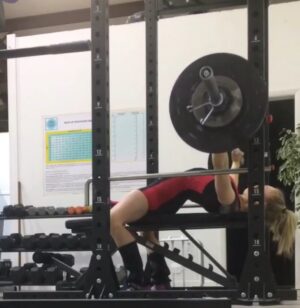
Another option to progress this exercise is to hold onto a band overhead that is affixed to a squat rack or other immovable object. With this option, the band supplies tension to your upper abdominals as you lower one leg and then the other. You can also progress this exercise by keeping your legs straight throughout.

How to Incorporate the Deadbug into your Routine

Try the Deadbug during your warm up to prime your body for good mechanics during your heavy compound movements. If you use this exercise as a primer, try just one set of 6-8 reps per side. Alternatively , you can use this exercise to train your abs. If using this to strengthen your abs and improve your pelvic and spinal positioning, try 3-4 sets of 8-15 reps per side towards the end of your workouts. Aim for 60 to 90 seconds of rest between sets. You can incorporate the Deadbug one or two times per week.

Closing Thoughts

What do you think? Have you tried the Deadbug exercise? Let me know in the comment section below. Looking for help with your exercise program? Learn more about my personal training or online coaching options.

Posted on

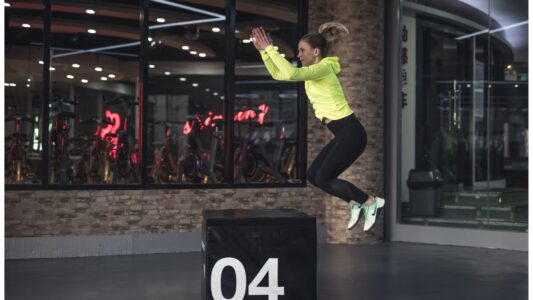
Should You Tailor your Workout Program to Your Menstrual Cycle?

Should you tailor your workout program to your menstrual cycle? Recently, a lot of fitness influencers have touted the idea of “cycling” your training program around your menstrual cycle. For example, many influencers have suggested taking two weeks off of exercise from ovulation to the start of your period. Others have suggested taking the week of your period off of training. Others have suggested doing only light training weeks during the last two weeks of the menstrual cycle. In this post, we dive into the research regarding exercise performance and injury risk across the menstrual cycle.

tailor your workout to your menstrual cycle
Posted on

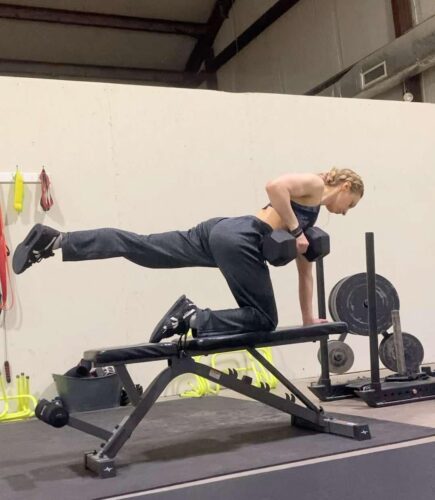
The Bird Dog Row

bird dog row

The Bird Dog Row

In this article, we will discuss the bird dog row, an appealing alternative to more conventional rowing exercises like seated cable rows or bent over rows. We will share some of the benefits of this rare exercise variation, how to perform it, and how to correctly implement it into your training program.

Posted on

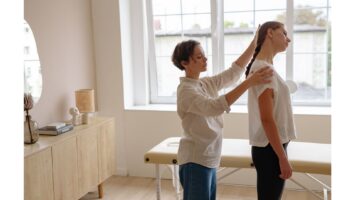
How to Improve your Posture

improve your posture

How to Improve your Posture

Good posture enhances your appearance and presence. Standing up tall can make you look thinner, feel stronger, taller and more confident. Better posture conveys competence and probably even improves your income. Good posture also makes you feel better, breathe better and reduces tension and discomfort in your neck and shoulders. In this post, we will discuss how to improve your posture.

Posted on

Fitness Apparel on a Budget: The Best Budget Gym Wear

budget gym wear

Everyone wants to look cute and feel good when they go to the gym. After all, feeling confident in your gym outfit can help boost your workout motivation and help you get to the gym on days you might not feel like it. In this post, we will discuss my favorite budget gym wear so that you can update your workout wardrobe without breaking the bank.

Posted on

Benefits of Jumping Rope

benefits of jumping rope

Benefits of Jumping Rope

Jumping rope is a fantastic exercise that delivers a ton of benefits. Many people wrongly believe that jumping rope is an exercise reserved for school age girls, or conversely, that it’s much to difficult and strenuous to employ in their fitness routine. However, with the right approach, jumping rope can help just about anyone improve their fitness and coordination. In this article, we will discuss why you should consider adding a jump rope routine into your workout program.

Posted on

Bodyweight Training vs. Traditional Resistance Training

bodyweight training

Bodyweight training refers to a training style in which you perform exercises solely with your own bodyweight without any additional equipment or machines. Bodyweight training has a ton of benefits, especially compared to traditional resistance training. Traditional resistance training refers to any resistance training program that uses a variety of fitness tools, including barbells, dumbbells, kettlebells, machines and resistance bands. In this article, we will compare these two types of training.